Like many of our guests, Patagonia had occupied a place on my travel wish list for many years. Photographs of the granite spires of Torres del Paine, endless horizons stretching beneath the Andes and stories of one of the world's last truly wild frontiers had always captured my imagination.
Earlier this year, Jo and I, together with two close friends, Pippa and Dick, finally travelled to southern Latin America to experience it for ourselves.
One of the great pleasures of travel, at least for us, is arriving with remarkably little prior research. Rather than allowing guidebooks and social media to shape expectations, we prefer to discover a place through our own eyes, allowing each destination to reveal itself naturally.
Patagonia—and Argentina before it—rewarded that approach in every possible way.
Our journey began in Buenos Aires. Elegant, cultured and effortlessly cosmopolitan, the city possesses a distinctly European character, where grand boulevards, classical architecture and vibrant neighbourhoods create an atmosphere that immediately feels familiar. Yet beneath that European elegance lies an unmistakably Argentine soul. Tango was born here, and its rhythm and passion seem woven into the city's identity, adding an intoxicating sense of place to our introduction to South America.
Leaving the capital behind, the true adventure began.
A short flight north brought us to Salta, gateway to one of Argentina's least explored regions—the remarkable Puna de Atacama. This immense high-altitude desert, where Argentina meets Chile and Bolivia, remains wonderfully absent from mainstream tourism and perfectly reflects the kind of destinations that have always inspired us.
Over the following five days we crossed vast volcanic plateaus, explored enormous calderas, climbed to breathtaking elevations and encountered wildlife whose names I could barely pronounce, let alone remember. Flamingos gathered on brilliant turquoise lagoons beneath snow-capped volcanoes, solitary vicuñas wandered across seemingly endless plains, while the silence and scale of the landscape created an overwhelming sense of remoteness.

It was a journey that continually reminded us how rewarding true exploration can be. There were no crowds, no queues and very little evidence that tourism had arrived at all. Instead, we found extraordinary scenery, genuine hospitality and the rare privilege of experiencing one of the world's great wildernesses much as it has existed for centuries.
It was impossible not to draw comparisons with many of the places we cherish most in Africa. Different continents, certainly, but united by vast open landscapes, exceptional wildlife, authentic people and that increasingly rare feeling of being wonderfully disconnected from the modern world.
Leaving the remarkable isolation of the Puna behind, our journey continued south by air and road towards the tiny mountain village of El Chaltén, nestled beneath the spectacular peaks of Argentine Patagonia. Here we exchanged high-altitude deserts for alpine landscapes, setting out on foot to experience two of the region's iconic natural wonders—the soaring granite spires of Mount Fitz Roy and the brilliant blue ice of Perito Moreno Glacier. It was a fitting introduction to Patagonia's mountain wilderness and merely a prelude to what still lay ahead.
From El Chaltén we travelled south across the immense open landscapes that define this part of the world. Distances in Patagonia are measured not in hours but in horizons, where endless steppe, distant mountains and grazing guanacos accompany you for much of the journey. It is a landscape that quietly rewards patience, revealing its beauty not in dramatic moments alone but in the sheer scale and solitude that unfolds mile after mile.
Eventually we reached the remote border crossing into Chile. In more than forty-five years of travelling, I have crossed countless international borders, many of them in wonderfully isolated places, and this felt reassuringly familiar. There was nothing elaborate or theatrical about it—simply a small frontier post quietly linking two vast wildernesses. Somehow it seemed entirely appropriate for this remarkable corner of the world.
Our reward lay just beyond.
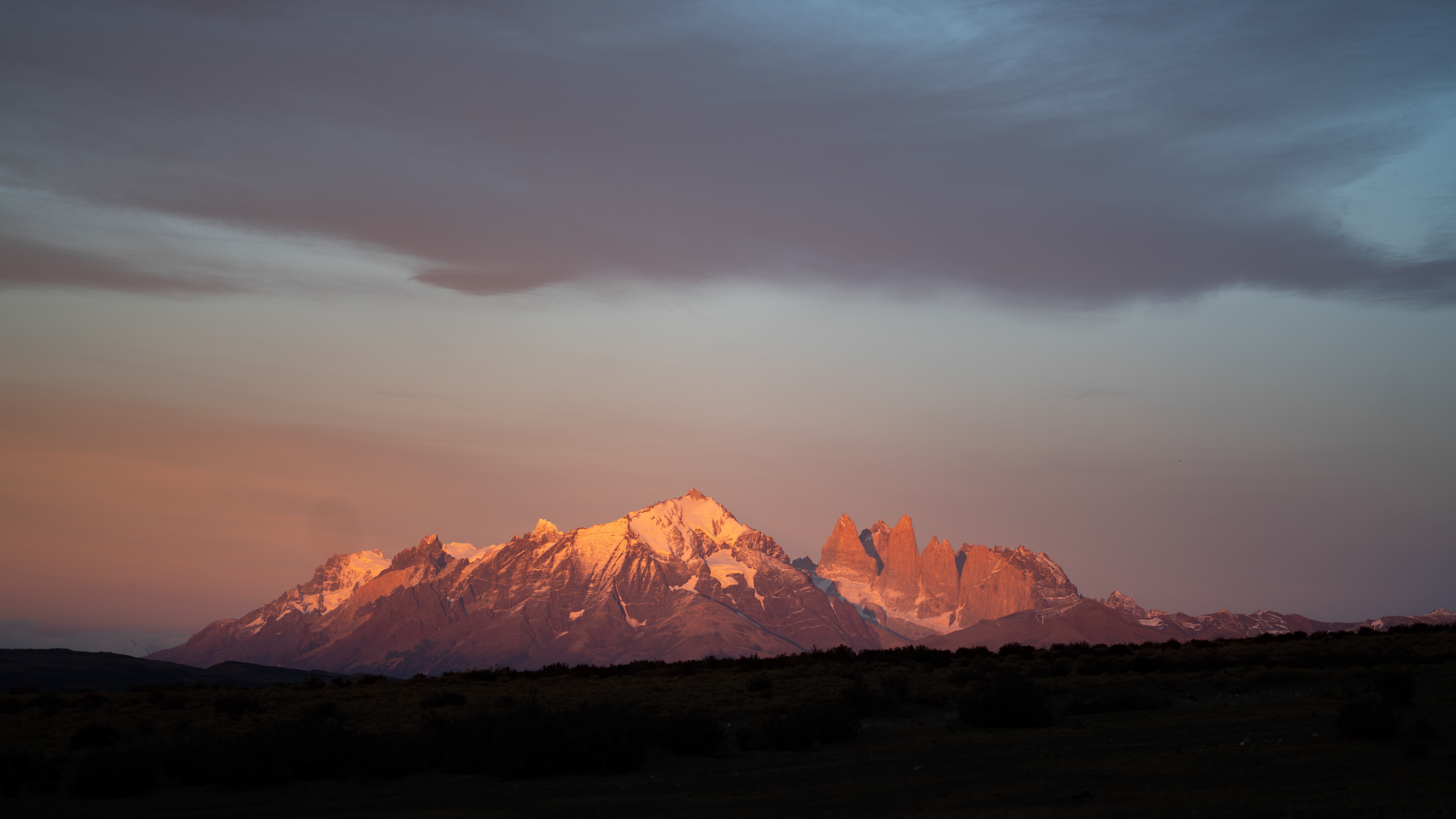
Arriving at our estancia with the magnificent granite towers of Torres del Paine rising above the landscape was one of those unforgettable travel moments. The setting was both dramatic and deeply peaceful. Every window framed another perspective of the mountains, reminding us that we had finally arrived at one of the world's great wilderness destinations.
Over the following days we explored the national park and Estancia by 4wd, on foot and horseback, discovering glacial lakes, ancient forests and expansive valleys beneath one of the world's most recognisable mountain skylines. The pace of life on the estancia reflected everything we value in authentic travel: genuine hospitality, exceptional guiding and the freedom to immerse ourselves in an extraordinary landscape rather than simply observe it.
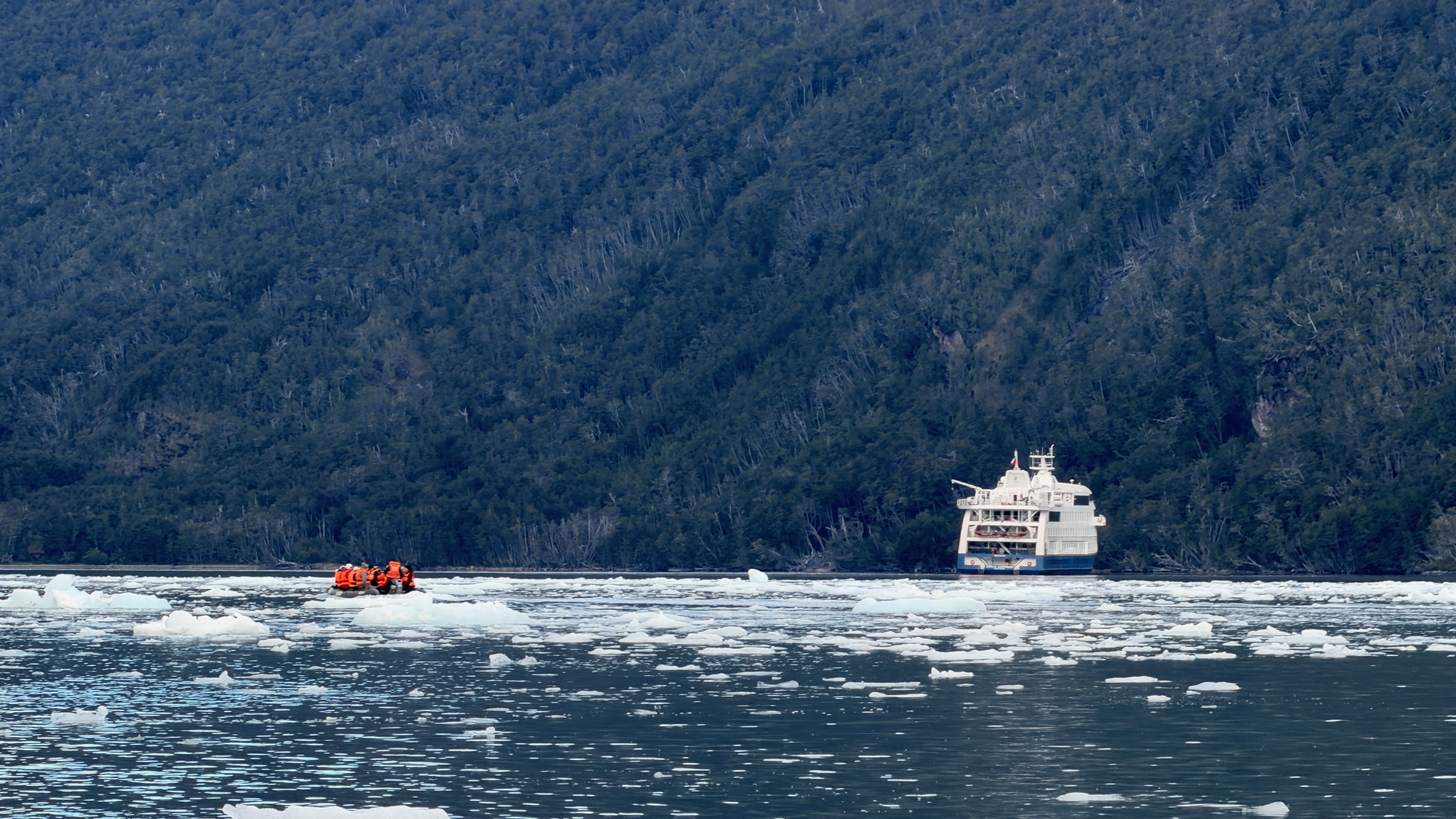
The final chapter of our journey began as we boarded a small expedition ship to explore the remote waterways of Tierra del Fuego. Cruising through Glacier Alley, we passed beneath immense rivers of ice spilling from the Darwin Range into the sea. Towering glaciers calved into the channels with deep echoes across the water, while condors, albatross and countless seabirds soared effortlessly overhead. Dolphins played in our wake and whales occasionally surfaced alongside the ship, constant reminders that this remains one of the planet's last great wildernesses.
As we approached Cape Horn, anticipation grew throughout the ship. For centuries this legendary headland has represented one of the world's great maritime milestones, where the Atlantic and Pacific Oceans meet in often unforgiving conditions.
The weather, however, had the final say.
Winds exceeding sixty knots made any landing impossible—a timely reminder that nature still dictates the rules in these southern oceans, just as it always has. Yet standing on deck as spray swept across the bow and Cape Horn emerged through the mist, none of us felt disappointed. If anything, the wild conditions made the experience feel even more authentic. The inability to set foot ashore detracted nothing from the excitement of reaching the southernmost extremity of South America. In many ways, the wind itself seemed entirely fitting for such a legendary place.
As our expedition ship finally made its way through the Beagle Channel towards Ushuaia, bringing an extraordinary journey to its conclusion, I found myself thinking of Lucas Bridges and his remarkable book Uttermost Part of the Earth. Long before tourism reached these remote shores, Bridges documented a world that few outsiders would ever experience, capturing not only the landscapes of Tierra del Fuego but also the spirit of the people who called it home.
Although much has changed since his time, standing at the very edge of South America and watching the mountains slowly disappear astern, it was easy to understand why this region has captivated explorers, sailors and travellers for generations. Patagonia is not simply a destination to be visited; it is a place to be experienced slowly, where distance, weather and wilderness continue to shape every journey.
For Jo and I, Patagonia had lived on our travel wish list for decades. Having finally experienced it, we returned with something far more valuable than photographs. We came home with the conviction that this extraordinary corner of the world embodies many of the same qualities that first drew us to Africa all those years ago: immense landscapes, authentic hospitality, unforgettable wildlife and that increasingly rare privilege of feeling genuinely removed from the modern world.
It is this spirit of exploration that lies at the heart of Explorer Travel Co and why Patagonia has earned its place alongside Africa in our portfolio. Like Lucas Bridges before us, we leave the uttermost part of the earth with memories that will remain long after the journey itself has ended.